AI Strategy
AI Is Not a Technology Initiative. It's a Business Transformation Initiative.
Organizations across every industry are investing heavily in Artificial Intelligence. From customer service and commerce to operations, supply chain, and employee productivity, leaders are exploring how AI can create competitive advantage and drive measurable business outcomes.
As these investments increase, one question frequently emerges:
Who should own AI?
In many organizations, AI initiatives naturally find their way into the technology organization. After all, AI requires infrastructure, data platforms, integrations, governance, security controls, and engineering expertise. Technology teams play a critical role in enabling AI adoption.
However, organizations that view AI solely through a technology lens often struggle to realize its full potential. The reason is simple - AI does not create value because of the agents you deploy, the LLMs you select, or the architecture you build. AI creates value when it changes outcomes, which are ultimately a business responsibility.
Why AI Is Different From Traditional Technology Initiatives
Historically, many technology projects focused on implementing systems that supported existing business processes. Organizations implemented ERP systems to manage financial operations. They deployed CRM platforms to manage customer relationships. They introduced collaboration tools to improve communication.
While these initiatives often required significant organizational effort, the underlying business processes largely remained the same. AI is fundamentally different. Rather than simply supporting existing processes, AI creates opportunities to redesign them.
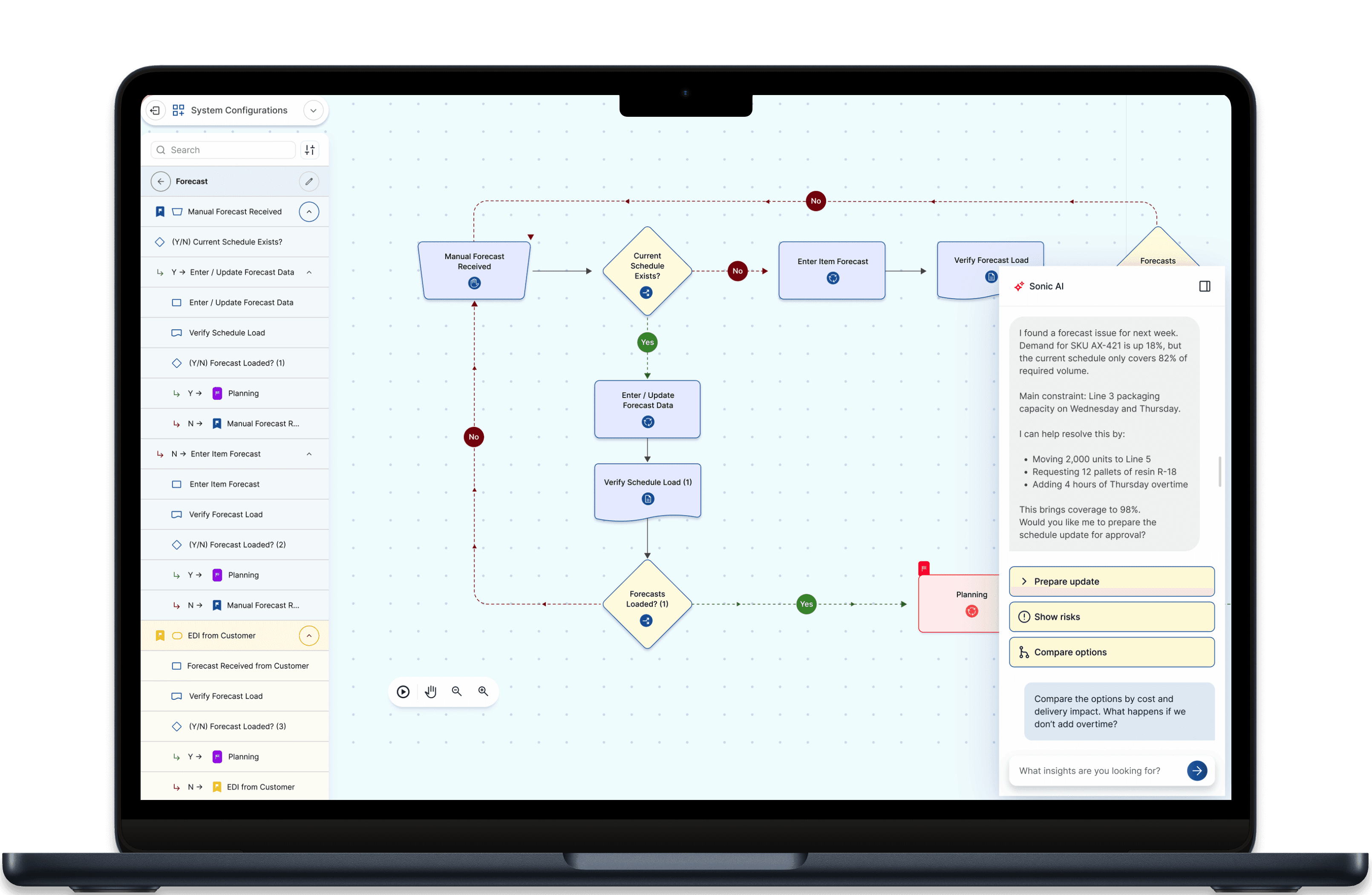
For ex. A customer service organization can move from reactive support to proactive issue resolution. A retailer can move from search-and-filter experiences to conversational product discovery. A manufacturer can shift from scheduled maintenance to predictive maintenance and asset optimization. An HR organization can move from periodic employee surveys to continuous sentiment monitoring and engagement.
These are not technology improvements but business transformations enabled by technology.
The Most Successful AI Initiatives Start With Business Outcomes
One of the most common mistakes organizations make is beginning with technology capabilities rather than business objectives.
Questions such as:
Which model should we use?
Which platform should we adopt?
Should we build or buy?
Which AI vendor is best?
are important, but they should not be the starting point.
Instead, leaders should begin with questions such as:
Which customer experiences need improvement?
Which operational bottlenecks are slowing growth?
Where are employees spending time on low-value activities?
What business outcomes would create the greatest impact?
How can we differentiate ourselves from competitors?
Once those questions are answered, technology decisions become significantly easier. The focus shifts from implementing AI to solving business problems.
AI Requires Cross-Functional Ownership
Because AI impacts nearly every function within the enterprise, it cannot succeed as an isolated initiative owned by a single department. Successful organizations create alignment between business and technology leaders from the outset. Business leaders define the outcomes they want to achieve. Technology leaders determine how those outcomes can be delivered securely, reliably, and at scale. Operations teams ensure that new workflows can be adopted.
Together, these groups create an environment where AI initiatives are connected directly to business priorities rather than technical capabilities.
What Business Transformation Looks Like in Practice
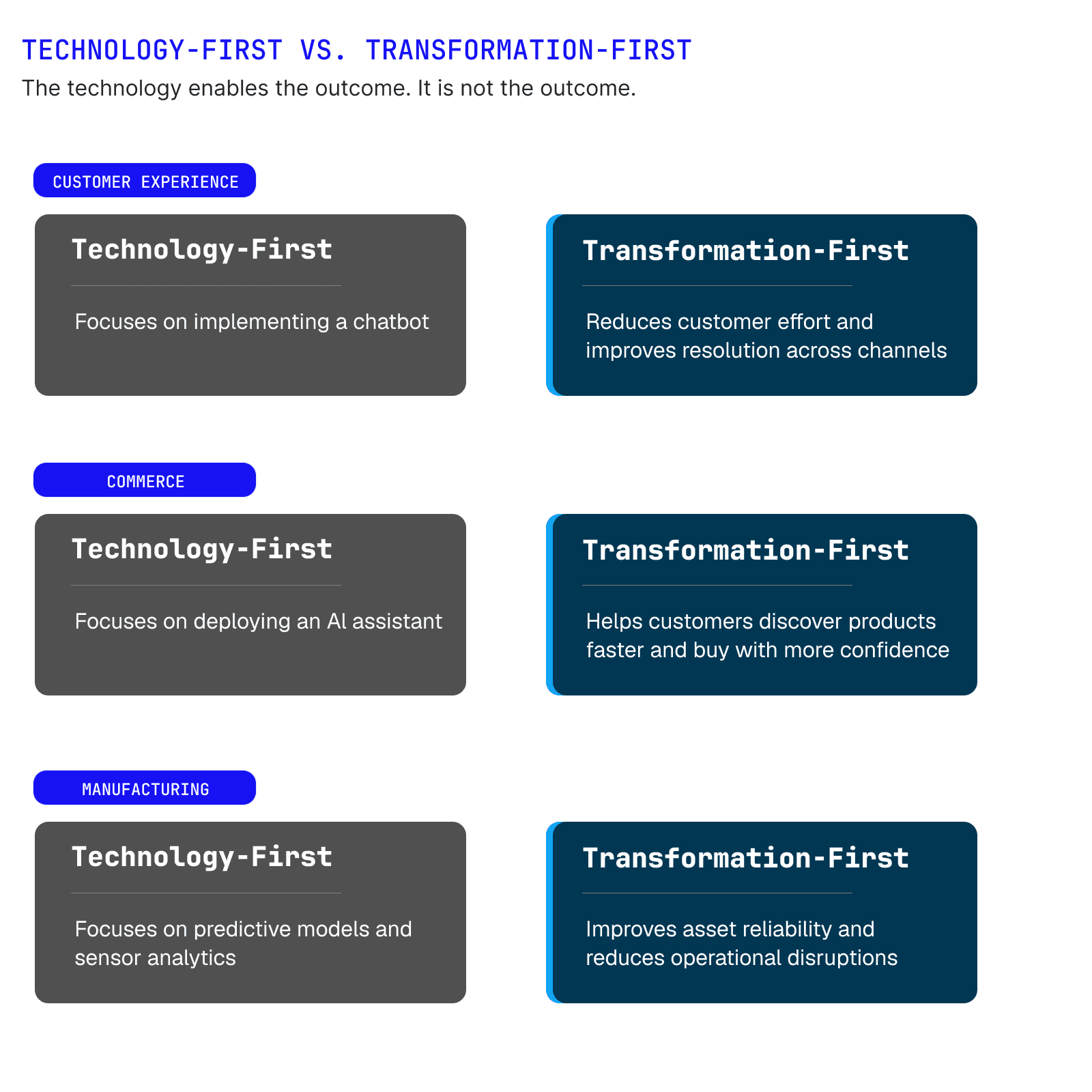
The difference between a technology initiative and a business transformation initiative becomes clearer when viewed through real-world examples.
Customer Experience
A technology-first approach might focus on implementing a chatbot.
A transformation-first approach focuses on reducing customer effort, improving resolution rates, and creating a more seamless experience across channels.
The chatbot becomes one component of a larger strategy rather than the goal itself.
Commerce
A technology-first approach might focus on deploying an AI assistant.
A transformation-first approach focuses on helping customers discover products faster, receive personalized recommendations, and complete purchases with greater confidence.
The outcome is increased engagement and conversion—not simply the deployment of another tool.
Manufacturing
A technology-first approach might focus on predictive models and sensor analytics.
A transformation-first approach focuses on improving asset reliability, reducing operational disruptions, and helping teams make better maintenance decisions.
Again, the technology enables the outcome, but it is not the outcome.
The Role of Strategy
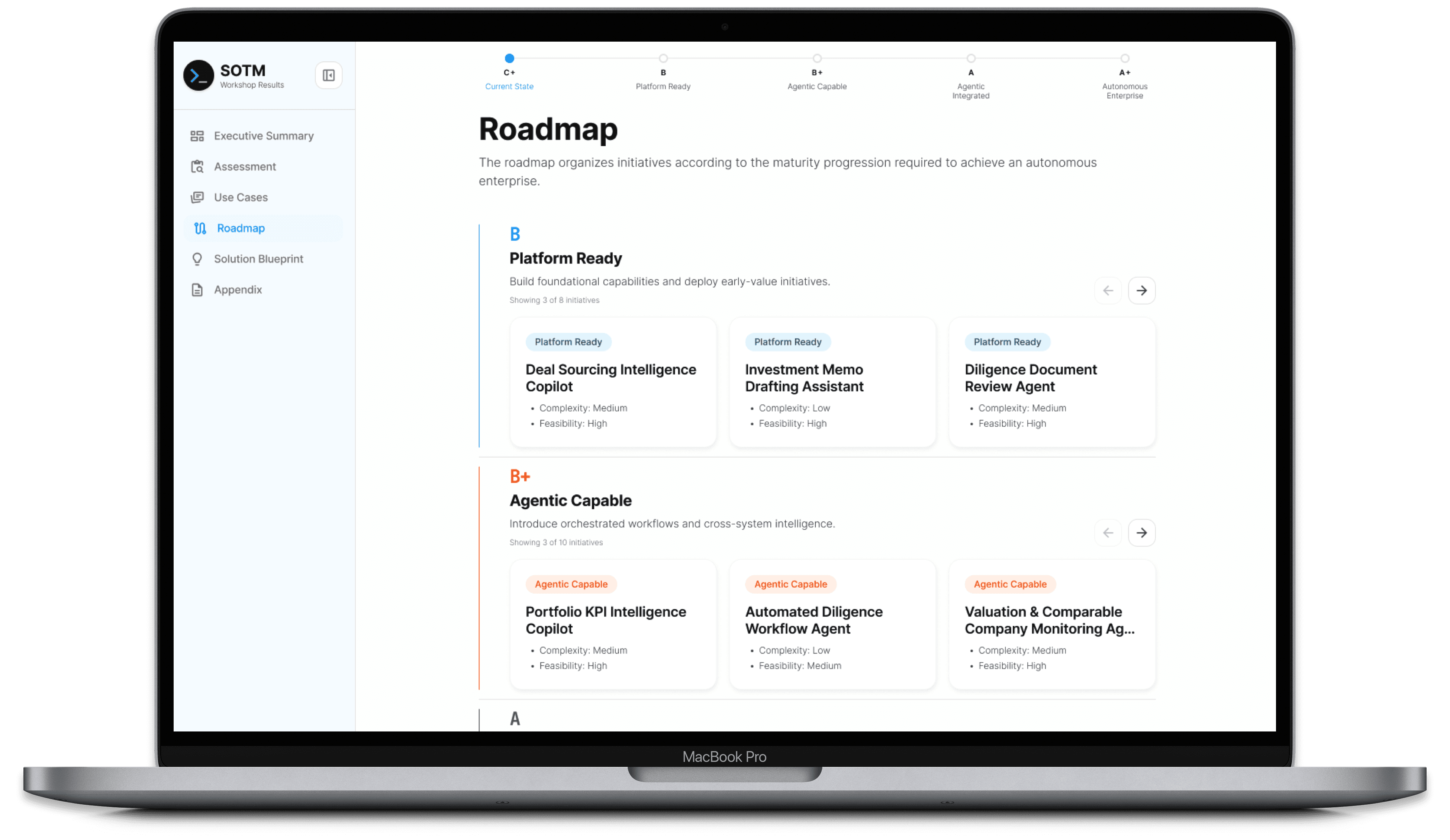
This is one of the reasons we advocate beginning every AI journey with strategy.
Without a clear understanding of business priorities, organizations often find themselves pursuing disconnected initiatives that generate activity but fail to create meaningful value.
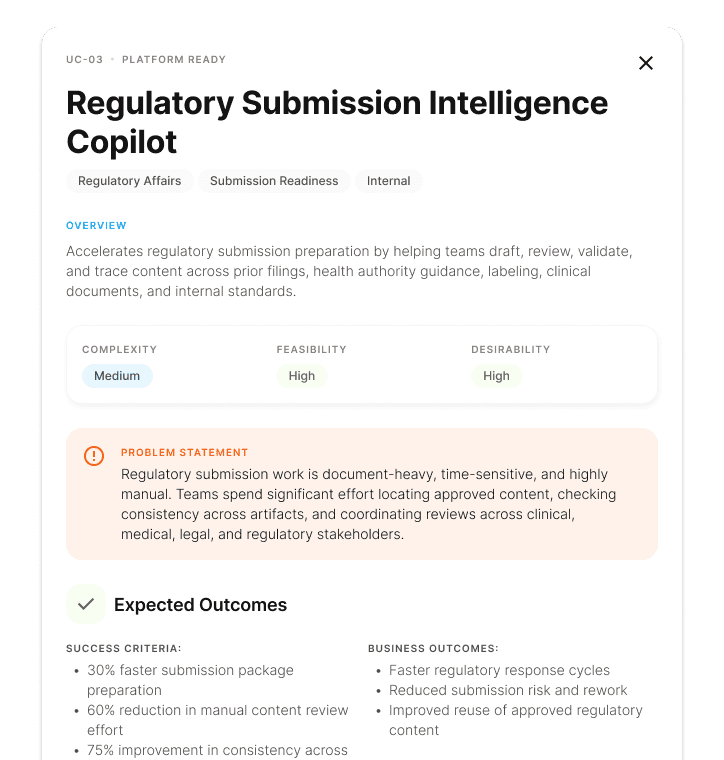
In our article, "Why Most AI Projects Fail Before They Ever Start," we explored how poor use case selection, unclear objectives, and weak executive alignment can derail AI initiatives before implementation even begins.
The solution is not more technology but greater clarity.
Organizations need to understand:
• Their current state
• Their desired future state
• The capabilities required to bridge the gap
• The use cases that offer the greatest potential value
Only then can technology decisions be made within the appropriate business context.
Business Transformation Requires New Thinking
The organizations creating the greatest value from AI are not simply identifying places where AI can be deployed. Instead, they are examining how AI can fundamentally improve customer experiences, employee productivity, operational efficiency, and decision-making across the enterprise.
This shift in mindset is important because it changes how success is measured. A technology-centric approach often focuses on implementation milestones such as models deployed, agents launched, or systems integrated. While these metrics are useful for tracking execution, they provide little insight into whether the business is actually creating value.
A transformation-centric approach focuses on outcomes. Has customer satisfaction improved? Are employees spending less time on repetitive tasks? Are operational bottlenecks being reduced? Is the organization making better and faster decisions? These are the questions that determine whether an AI initiative is successful.
Organizations that approach AI through the lens of business transformation are more likely to prioritize the right use cases, secure executive sponsorship, drive organizational adoption, and ultimately realize measurable returns on their investments. They view AI not as a collection of tools to be implemented, but as a catalyst for improving how the business operates.
Closing Thoughts
The discussion around AI often centers on models, platforms, agents, and technology stacks. While these components are important, they represent only one part of a much larger transformation journey.
The organizations that will lead in the coming years will be those that successfully align strategy, people, processes, data, and technology around a common set of business objectives. They will use AI to reimagine customer experiences, empower employees, optimize operations, and create new sources of competitive advantage.
Technology will always play a critical role in enabling these outcomes, but it should not define the initiative. AI investments should begin with a clear understanding of the business problem being solved, the value being created, and the organizational change required to achieve that value.
When viewed through that lens, AI becomes much more than a technology initiative. It becomes a business transformation initiative capable of reshaping how organizations operate, compete, and grow in an increasingly digital world.